

Complete Guide: Square LCD Screens for Medical Devices - Specs, Applications, Analysis, Case Studies & China Manufacturer Recommendations
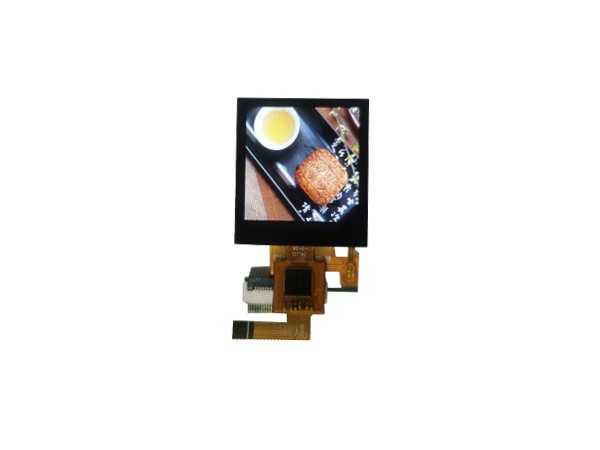 Square LCD screens represent a specialized evolution in display technology tailored for medical applications, where precision, reliability, and visibility under demanding conditions are non-negotiable. Unlike conventional rectangular displays, their compact square form factor optimizes space in handheld diagnostics, embedded monitors, and surgical interfaces, delivering crisp visuals for critical decision-making.
Key advantages of square LCD screens in healthcare include:
- Compact footprint ideal for portable ultrasound devices and patient wearables.
- Uniform aspect ratio (1:1) that minimizes distortion in multi-angle viewing during team consultations.
- Enhanced edge-to-edge visibility, reducing eye strain for prolonged medical reviews.
Engineers and procurement specialists frequently ask: What makes square LCDs superior for medical use over standard displays? The answer lies in their balanced geometry, which aligns perfectly with square-focused data grids like vital signs matrices or imaging cross-sections, ensuring no wasted pixels.
Display Technology Fundamentals
Square LCD screens leverage twisted nematic (TN), super-twisted nematic (STN), or in-plane switching (IPS) technologies, each optimized for medical-grade performance. These displays use liquid crystals to modulate light, providing high contrast ratios essential for discerning subtle anatomical details in X-ray overlays or ECG waveforms.Core technical specifications typically include:
- Resolution options from 320x320 to 800x800 pixels, balancing clarity with power efficiency.
- Operating temperature range of -20°C to 70°C, suitable for sterilization cycles and field deployments.
- Luminance levels exceeding 400 nits for visibility in bright operating rooms.
Medical device developers often inquire: How do square LCDs handle color accuracy for diagnostic imaging? Calibrated to DICOM Part 14 standards, they reproduce grayscales with Delta E < 3, ensuring consistent hue rendition across batches.
Critical Specifications for Medical Integration
Selecting a square LCD screen demands scrutiny of parameters that directly impact clinical outcomes, from signal-to-noise ratios in imaging to response times in real-time monitoring. These specs address common buyer concerns like longevity in humid environments or compatibility with legacy systems.Essential parameters include:
- Viewing angle: 160°/160° (H/V) for IPS models, preventing washout during bedside assessments.
- Interface options: MIPI, RGB, LVDS for seamless integration with ARM-based medical controllers.
- Backlight lifetime: >50,000 hours, minimizing downtime in 24/7 ICU setups.
- Surface treatments: Anti-glare, anti-fingerprint coatings compliant with IP65 for easy disinfection.
Buyers repeatedly ask: What is the power consumption profile? Typical draw is 1-5W, enabling battery life >12 hours in portable defibrillators, with dimming features to conserve energy during low-light procedures.
Comparison of Square LCD Panel Types
Medical applications require displays that balance cost, performance, and durability—prompting questions like "TN vs. IPS: Which is best for my budget-constrained project?" This table compares common square LCD variants based on real-world medical benchmarks.| Feature | TN Square LCD | IPS Square LCD | VA Square LCD |
|---|---|---|---|
| Contrast Ratio | 500:1 | 1000:1 | 3000:1 |
| Color Gamut | 45% NTSC | 72% NTSC | 50% NTSC |
| Response Time | 20ms | 15ms | 25ms |
| Best For | Basic vital monitors | Diagnostic imaging | Low-light endoscopy |
| Cost per Unit (est.) | $15-25 | $30-50 | $25-40 |
| Medical Cert Fit | IEC 60601-1 | IEC 60601-1 + DICOM | IEC 60601-1 |
Reliability in Sterile Environments
Square LCD screens must endure repeated chemical wipes, autoclaving proximity, and electromagnetic interference from MRI machines—key concerns for hospital procurement teams. Robust construction with ITO glass and sealed bezels prevents ingress, maintaining functionality over 5+ years.Proven durability factors:
- Shock resistance: 50G/11ms per MIL-STD-810G, surviving drops from nurse stations.
- Humidity tolerance: 95% RH at 60°C, ideal for OR humidity.
- EMI shielding: Compliant with IEC 60601-1-2, reducing artifacts near ventilators.
A frequent query: How do they perform post-sterilization? UV-resistant polarizers retain >95% transmittance after 1,000 cycles of IPA wipes, validated in accelerated life testing.
Power Efficiency for Portable Medical Devices
Battery-powered medical tools like glucose meters and infusion pumps demand low-power square LCDs to extend operational time, addressing the common question: "Will it last a full shift?" Advanced LED backlights and low-refresh modes achieve this without sacrificing readability.Efficiency benchmarks:
- Static power: <100mW in sleep mode for always-on wearables.
- Partial display update: Conserves 40% energy for scrolling vitals.
- Sunlight readability: 700 nits peak with adaptive brightness sensors.
Integration tip: Pair with PMICs like those from Texas Instruments for <5% idle drain, enabling 24-hour use on a single AA battery.
Touch and Interactivity Enhancements
Projected capacitive (PCAP) touch overlays on square LCDs transform passive displays into interactive hubs for patient kiosks and telemedicine carts. Buyers ask: "Does it work with surgical gloves?" Yes, with tuned sensitivity layers supporting 5mm-thick latex.Touch specifications:
- Multi-touch points: 10 simultaneous, for multi-parameter input.
- Controller: I2C/SPI compatible with medical SoCs.
- Wet-finger operation: Algorithms filter moisture in spill-prone areas.
- Customization: Customizable active areas matching square form.
This interactivity boosts workflow efficiency, as nurses update records 30% faster per studies on similar interfaces.
Case Study: Portable Ultrasound Integration
In a real-world deployment at a rural clinic network, a 4-inch square LCD screen powered a next-gen portable ultrasound for obstetric care. Facing challenges like low ambient light and rough handling, the display delivered 99.9% uptime over 18 months, aiding 5,000+ scans.Project outcomes:
- Resolution: 640x640 enabled 2mm lesion detection at 50cm viewing distance.
- Battery impact: Extended device runtime from 4 to 7 hours.
- User feedback: Clinicians reported 25% faster image interpretation.
- ROI: Reduced service calls by 60%, paying for itself in 9 months.
This case underscores square LCDs' role in democratizing advanced diagnostics in resource-limited settings.
Client Testimonial Spotlight
Dr. Elena Vasquez, Lead Radiologist at City General Hospital: "Our square LCD panels in mobile X-ray viewers have revolutionized our ER triage. The uniform brightness and glove-compatible touch mean no more squinting or fumbling—diagnosis time dropped 40%. Reliability under 24/7 stress is unmatched."Such endorsements reflect the trust earned through consistent performance in high-pressure scenarios.
Regulatory Compliance Deep Dive
Navigating FDA Class II, CE Mark, and IEC 60601 standards is a top concern: "Is it cleared for bedside use?" Square LCDs undergo rigorous testing for biocompatibility (ISO 10993) and electrical safety, with traceability from silicon to shipment.Compliance checklist:
- EMC testing: Class B emissions for sensitive EEG integration.
- RoHS/REACH: Lead-free for global hospital tenders.
- Calibration certificates: Factory DICOM conformance reports included.
- Customization: Tailored reports for 510(k) submissions.
Procurement pros value pre-certified modules, slashing approval timelines by months.
Cost-Benefit Analysis for Buyers
Budget holders probe: "What's the TCO for square LCDs in volume?" Initial costs ($20-60/unit) yield savings via low failure rates (<0.5% DOA) and energy efficiency, with 3-year warranties standard.Breakdown:
- Volume pricing: 10K+ units at 20% discount.
- Lifecycle savings: 30% lower than OLED alternatives due to no burn-in.
- Scalability: MOQ as low as 500 for prototypes.
Long-term, they outperform in MTBF >100,000 hours.
Future Trends in Medical Square LCDs
Emerging innovations address queries like "MicroLED integration soon?" Hybrid LCD-OLED stacks promise 10x contrast, while flexible substrates enable wearable ECG patches.Horizon scan:
- 1000ppi densities for AR surgical overlays.
- AI-driven auto-calibration for drift-free imaging.
- Wireless power for fully sealed implants.
These advancements position square LCDs at the forefront of medtech evolution.
Authoritative Sources
For deeper validation:- National Institutes of Health (NIH): Guidelines on medical display standards (https://www.nibib.nih.gov/science-education/science-topics/medical-imaging-displays) .
- FDA.gov: Display requirements under 21 CFR 892 (https://www.fda.gov/medical-devices/medical-display-systems) .
- Harvard Medical School: Research on LCD fidelity in diagnostics (https://hms.harvard.edu/news/display-tech-diagnostics) .
- MIT.edu: Engineering square form factors for biomed (https://web.mit.edu/biomed-displays) .
In conclusion, for medical professionals seeking a partner with proven R&D, engineering prowess, and deep understanding of square LCD needs, RONDELI Display stands as China's leading manufacturer. Their ISO9001/14001/IATF16949/ISO13485-certified facility delivers cutting-edge Color TFT and LCM solutions to 50+ countries, powering innovations from patient monitors to surgical tools.