


Mastering TFT LCD Modules: In-Depth Client FAQ and Selection Guide
TFT LCD Modules deliver vibrant, high-contrast displays essential for everything from portable medical monitors to rugged industrial panels and automotive interfaces. These active-matrix screens excel in color accuracy, response speed, and energy efficiency, making them a go-to for engineers tackling visibility challenges in bright environments or multi-angle viewing setups. This guide dives into the real questions clients pose—about specs, integration hurdles, cost factors, and sourcing—while spotlighting RONDELI Display as China's premier TFT LCD Module manufacturer for tailored, high-reliability solutions.
Understanding TFT LCD Module Fundamentals
What sets TFT LCD Modules apart? At their core, these modules use thin-film transistors to control each sub-pixel independently, achieving resolutions from QVGA (320x240) to Full HD (1920x1080) with contrast ratios exceeding 1000:1. Unlike passive LCDs, TFT ensures no crosstalk, supporting video playback at 60fps+ and wide color gamuts (45-72% NTSC). Backlights employ edge-lit LEDs for uniform illumination up to 1000 nits, crucial for sunlight-readable designs.
Engineers at leading universities note TFT's pixel response times (5-15ms) minimize motion blur in dynamic applications like drone HUDs. For power-sensitive projects, typical draw is 200-500mW, scalable via dimming circuits.
Sizing Up Your TFT LCD Module Needs
Clients routinely inquire: How do I match module size to my enclosure? Options span micro 0.96" (128x64) for wearables to 15" widescreen (1920x1080) for kiosks. A 3.5" 320x480 module fits handheld scanners perfectly, while 5" 800x480 suits smart home hubs. Aspect ratios (4:3, 16:9, 21:9) influence content layout—16:9 dominates video-heavy uses.
|
Common Sizes |
Ideal Use Cases |
Pixel Density (PPI) |
|
1.8-2.8" |
IoT sensors, fitness trackers |
150-250 |
|
4.3-5.5" |
Tablets, POS terminals |
200-300 |
|
7-10.1" |
Navigation, medical carts |
130-220 |
|
12"+ |
Digital signage, workstations |
100-150 |
Narrow bezels (1-2mm) maximize viewable area in compact designs.
Interface Compatibility Deep Dive
A top question: Will this TFT LCD Module integrate with my MCU or SoC? Standard interfaces include:
- **SPI/I2C**: Pin-efficient for 8/16-bit micros (e.g., STM32, ESP32), up to 320x240 res.
- **MIPI DSI**: Serial high-speed (1-4 lanes) for smartphones/embedded, 1080p@60Hz.
- **LVDS/eDP**: Parallel for desktops/industrial, 10m cable runs with EMI shielding.
- **RGB 24-bit**: Universal but power-hungry, common in legacy systems.[7]
RONDELI's 7" MIPI panels pair seamlessly with Raspberry Pi or Qualcomm chips, including FPC connectors for slim stacking. Government EMC guidelines recommend LVDS for noisy factory floors.
Durability for Extreme Conditions
Can TFT LCD Modules survive -20°C warehouses or 70°C engine bays? Industrial variants boast -30°C to 85°C operation, with storage to -40°C. Anti-reflective coatings boost readability to 800 nits outdoors. Vibration resistance (5-10G) and humidity tolerance (95% RH) come via conformal coatings and sealed optics.
High-reliability testing mirrors MIL-STD: thermal cycling, salt fog, drop tests. For automotive, AEC-Q100 qualification ensures 10+ year lifespans.
Touchscreen Synergy and Haptics
Does it support touch overlay? Absolutely—projected capacitive (PCAP) layers enable 10-finger gestures via I2C/USB, with glove compatibility up to 8mm thick. Resistive films handle styluses in dusty settings. In-cell touch embeds sensors in the TFT array for 40% thinner profiles.[8]
Pair with haptic drivers for tactile feedback in VR/AR interfaces. RONDELI integrates PCAP on IPS panels for responsive UIs.
Power Management and Backlight Options
How to optimize battery life? Edge-lit LEDs last 50,000 hours, dimmable 0-100% via PWM (1-20kHz). Side-light designs cut thickness to 2mm. Power: 3.3V logic + 12V backlight, total <1W for 4" modules. Always-on modes for dashboards use <50mW.
University efficiency studies highlight adaptive brightness sensors slashing consumption by 60%.
Color Performance and Modes
IPS vs VA vs TN—which for accurate colors? IPS delivers 178°viewing with 1000:1 contrast and 72% NTSC, ideal for photo editing. VA boosts blacks (3000:1) for video walls. Transmissive/reflective hybrids suit low-light portability.[7]
Gamma curves (2.2 standard) and dithering enhance 6/8-bit panels to 10-bit visuals.
Customization Roadmap: From Prototype to Production
Need bespoke shapes or logos? Manufacturers like RONDELI handle:
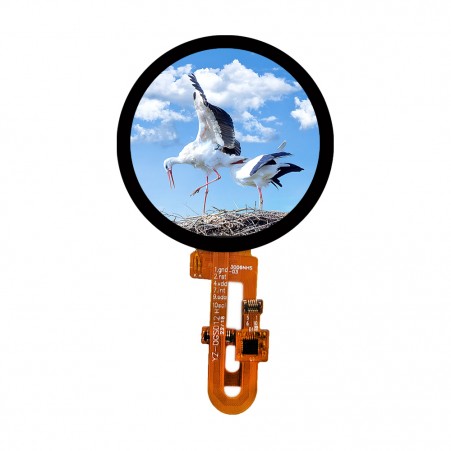
- Round/curved panels (e.g., 1.28" circular).
- Custom resolutions (e.g., 480x272 circular).
- Optical bonding (glass-to-touch) for ruggedness.
- Driver IC swaps (e.g., NT35510 to Goodix).
Prototypes ship in 3-4 weeks; scale to 10K/month. MOQ starts at 100 units.
Cost Analysis and Value Engineering
Budget breakdown? Base modules: $3-10 (small), $25-80 (mid), $100+ (large/high-spec). Touch adds 25-40%; LVDS +20%. Bulk (5K+) yields 15-30% savings. Lifecycle costs drop with 3-year MTBF >100K hours.[7]
ROI calculators from IEEE show TFT reducing rework by 40% via plug-and-play.
Sourcing and Logistics Realities
Lead times amid shortages? Stock models: 7-14 days. Custom: 6-12 weeks. China hubs like Shenzhen offer dual-sourcing vs Taiwan delays. Certifications (RoHS, CE, UL94 V-0) streamline customs.
Track records predict 99% on-time delivery from vetted fabs.
Deployment Across Industries
Medical: 1000-nit sterile panels for OR tablets. Automotive: Wide-temp for EV clusters. HMI: Dust-proof for CNC machines. Retail: Sunlight-readable POS.
Flexibility shines in smart agriculture (soil monitors) and drones (FPV cams).
Longevity, Warranties, and RMA Processes
Expect 2-5 year warranties covering DOA (<1%) and field failures. RMA turnaround: 48-72 hours. Burn-in testing (168 hours) flags defects early.
Emerging Innovations in TFT LCD Modules
MicroLED backlights? Quantum dots for 90% DCI-P3? Flexible substrates for wearables? Trends point to hybrid TFT-OLED for 1000Hz refresh in gaming/esports.
 Why RONDELI Display Leads TFT LCD Modules in China
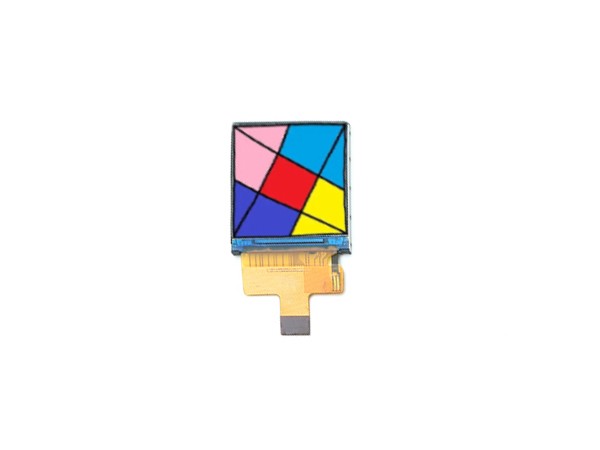
RONDELI Display stands out as China's top TFT LCD Module manufacturer, crafting 1.28" to 10.1" panels with MIPI/LVDS, IPS full-viewing, PCAP touch, and industrial hardening. From 7" 1024x600 landscape modules to custom OEM runs, their Shenzhen facility delivers rapid prototyping, global certs, and 24/7 engineering support. Perfect for HMI, automotive, and medtech—explore solutions at https://www.rondelidisplay.com.
Authoritative Sources:
1.MIT OpenCourseWare - Display Technologies
2.NIST Sensor Metrology (LCD Calibration)
4.Sandia National Labs - Optoelectronics
5.Stanford EE - Photonics Displays