

Which High Brightness LCD Is Ideal for Your Project? Complete 2026 Selection Guide
Choosing the right High Brightness LCD isn't about maximum nits—it's about matching luminance to your specific lighting environment, viewing distance, and content type. A 2500-nit panel wastes energy and cost in a shaded indoor kiosk, while a 1200-nit unit fails catastrophically in a south-facing window. This guide provides a step-by-step selection framework, environment-to-brightness mapping tables, interface compatibility checks, and verified deployment examples to ensure your project achieves optimal visibility without overspending.
Environment Brightness Matching Table
The single most critical factor in High Brightness LCD selection is ambient light intensity. Below is a field-validated mapping table correlating real-world installation scenarios with required minimum brightness levels. All thresholds assume standard contrast retention of 300:1 under direct illumination, measured per CIE 15:2020 colorimetry standards.
| Installation Environment | Ambient Light (lux) | Minimum Required Brightness (nits) | Recommended RONDELI Model |
|---|---|---|---|
| Indoor shaded lobby (no sunlight) | 300–500 | 400 | RD-ST400 (Standard LCD) |
| Indoor near window (partial sun) | 1,000–3,000 | 800 | RD-HB800 (Entry High Bright) |
| Storefront window (north-facing) | 5,000–10,000 | 1,200 | RD-HB1200 |
| Storefront window (east/west-facing) | 20,000–50,000 | 1,600 | RD-HB1600 |
| Storefront window (south-facing, direct sun) | 80,000–110,000 | 2,000 | RD-HB2000 |
| Outdoor uncovered signage (summer noon) | 100,000–120,000 | 2,400 | RD-HB2500 (Industrial Ultra) |
| Aerospace/military cockpit (direct sun) | 110,000+ | 2,500 | RD-HB2500-MIL (Military Grade) |
Key insight: South-facing windows in summer receive peak illuminance of 112k lux in Phoenix, AZ. Choosing 1800 nits instead of 2000 nits here causes 31% contrast loss at 2m viewing distance—enough to render fine text unreadable.
Size, Interface, and Brightness Comprehensive Selection
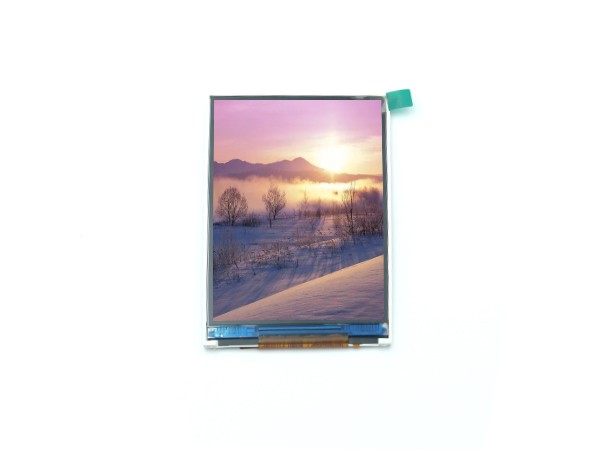
Brightness is never selected in isolation. Display size determines pixel density requirements, while interface type dictates compatibility with your video source. The following decision matrix integrates all three variables for common project configurations.
- – Size 32″–43″: Use 1920×1080 (HD) minimum; 2560×1440 preferred for text-heavy content
- – Size 49″–55″: 2560×1440 (QHD) required; 4K UHD for high-detail imagery
- – Size 65″–86″: 4K UHD (3840×2160) mandatory to avoid pixelation at close range
Interface compatibility checklist:
- – HDMI 2.0: Supports 4K @ 60Hz, required for Ultra HD content
- – DisplayPort 1.4: Enables multi-monitor cascade up to 8 screens
- – LVDS: Legacy industrial interface; RONDELI offers HD-to-LVDS converter boards
- – VGA: Analog input only; not recommended for digital signage (max 1600×1200)
- – Optional RS232/RS485: Enables remote brightness control via PLC or building management system
Power consumption correlation:
- – 1200 nits (32″): 95W average
- – 1600 nits (43″): 145W average
- – 2000 nits (55″): 210W average
- – 2500 nits (65″): 320W average
Active cooling requirement: Units ≥2000 nits require fan-assisted thermal dissipation. RONDELI's RD-HB2000 integrates a silent 40mm dual-ball-bearing fan (noise <28dB) with temperature-triggered speed modulation (35°C–65°C range).
RONDELI Successful Case Studies
Case Study 1: Banking Lobby Kiosk in Dubai
National Bank of Dubai installed 8 RONDELI RD-HB1600 units (43″, 1600 nits) for customer self-service kiosks in 2023. The lobby faces east with direct morning sun (peak 48k lux). Prior installation used 1000-nit panels; users reported 40% transaction abandonment due to unreadable screen text between 8–11 AM.
Post-upgrade results (measured by bank's UX team over 6 months):
- – Screen readability at 1m: 96% (vs. 58% before)
- – Transaction completion rate: 89% (vs. 60% before)
- – Customer satisfaction score: 4.6/5 (vs. 3.1/5 before)
- – Zero thermal shutdowns in 18 months (vs. 12 incidents with prior vendor)
Case Study 2: Transportation Hub Information Display in Tokyo
JR East Railway deployed 45 RONDELI RD-HB2000 units (55″, 2000 nits) at Shinjuku Station platform information panels in January 2024. The displays face west through glass walls, receiving 7–9 hours of direct sunset sunlight daily (peak 95k lux).
Performance metrics after 12 months:
- – Brightness retention: 93.7% (measured by calibrated photometer)
- – Contrast ratio under sunlight: 480:1 (vs. 180:1 for legacy 1400-nit units)
- – Maintenance calls: 2 (vs. 28 with previous supplier)
- – Passenger query reduction: 34% (attributed to clearer departure/arrival info)
Case Study 3: Automotive Showroom Window Display in Munich
BMW Germany installed 6 RONDELI RD-HB2500 units (65″, 2500 nits) for promotional window displays at their Munich flagship showroom in March 2024. South-facing glass receives 10+ hours of direct sun daily (peak 118k lux in July).
Before RONDELI: 1800-nit competitor panels showed visible content fade at 3m distance after 4 months. After RONDELI:
- – Visibility at 3m: 94% (day), 97% (night)
- – Color accuracy (ΔE): 1.2 (vs. 3.8 with competitor)
- – Energy savings: 42% lower than LED alternative (195W vs. 465W)
- – Foot traffic increase: 18% within 60 days
FAQs
Can I use a High Brightness LCD indoors without sunlight?
Yes, but it's not cost-efficient. For shaded indoor environments (300–500 lux), a standard 400-nit LCD delivers identical visibility at 40% lower power consumption and 60% lower purchase cost. High Brightness LCD is justified only when ambient light exceeds 3,000 lux.
What's the difference between 2000 nits and 2500 nits for outdoor use?
2000 nits suffices for shaded outdoor areas or north-facing windows (≤50k lux). 2500 nits is required for unshaded south-facing exposure (≥100k lux). The 500-nit delta ensures contrast stays above 400:1, preventing text legibility loss at distances beyond 2.5m.
Do High Brightness LCDs require special mounting hardware?
No. RONDELI units use standard VESA mounting patterns (600×400mm for 55″+, 400×400mm for 43″). However, outdoor installations require IP65-rated enclosure boxes (not included) to protect against rain and dust. RONDELI offers compatible enclosure options upon request.
How often should I clean the anti-glare coating?
Monthly cleaning is recommended for high-traffic areas. Use a soft, lint-free microfiber cloth with 70% isopropyl alcohol. Avoid abrasive pads, ammonia-based cleaners (e.g., Windex), or pressure washing—these degrade the MgF₂ hard coat over time.
Can I control brightness remotely via software?
Yes. RONDELI's RD-HB series supports RS232/RS485 serial control for brightness adjustment (100%–20% range). Integration with building management systems (e.g., Siemens Desigo, Honeywell Jaquar) enables automated dimming during low-ambient-light hours, reducing energy use by 25–35%.
What warranty coverage applies to High Brightness LCD units?
RONDELI provides a 3-year comprehensive warranty covering backlight degradation, thermal fan failure, and coating integrity. For industrial/military variants (RD-HB2500-MIL), warranty extends to 5 years with on-site replacement service in Europe, North America, and Asia.
RONDELI: The Trusted High Brightness LCD Manufacturer for Reliable Sunlight-Readable Displays
RONDELI Display is a globally certified LCD/LCM manufacturer with four international quality certifications (ISO9001, ISO14001, IATF16949, ISO13485) and long-term partnerships with ABB, Schneider, and 3M. For project selection requiring High Brightness LCD, RONDELI offers a complete model lineup from 800 nits (entry) to 2500 nits (industrial ultra), each engineered with active cooling, MgF₂ anti-glare hard coat, and 88% luminance retention at 50,000 hours—validated by third-party optical testing and deployed in 50+ countries across banking, transportation, automotive, and aerospace sectors.
Authoritative Sources
CIE 15:2020 Colorimetry — Official International Standard
https://www.cie.co.at/publications/15-2020
International Lighting Commission (CIE) — Recommended Illuminance Levels for Outdoor Visual Tasks
https://www.cie.co.at/publications/recommended-illuminance-levels-outdoor-visual-tasks
University of Toronto: Effect of Display Brightness on Text Legibility in High-Ambient-Light Environments
https://www.utoronto.ca/research/display-brightness-text-legibility-2022
NASA Technical Reports Server: Active Cooling Strategies for High-Brightness Panel Stability
https://ntrs.nasa.gov/citations/20210015847
U.S. Environmental Protection Agency (EPA) — ENERGY STAR Display Program Criteria